In my previous post, I asked, "What Happened to Cool Japan?" My general answer was drawn from personal experiences and observations and somewhat informed by the articles and blogs I've read. Basically, Cool Japan was smothered by the shrinking economy and the increasing insularity of a society that feels awfully beleaguered. Although the likes of Murakami Haruki and Miyazaki Hayao have seniority and are somewhat insulated from any backlash against their art and the critical dissection of Japanese society via their well-refined crafts, there's no room for any successors to Murakami Haruki or Miyazaki Hayao.
The side-effect of this is that most of the forms of expression and entertainment have taken on an assembly-line quality, formulaic, derivative, and uninspired. Occasional flashes to break through the fog, like Attack on Titan, but the overwhelming majority of Japanese intellectual property and immaterial culture is very repetitive and reeks with the pungent hospital-scent of corporate boardroom sterility.
In my last post, I described the process through which a close-knit American anime-fan* subculture evolved--specifically my personal experience of that process. What I want to emphasize as I write this tonight is how the North American demand for Japanese anime was not matched by Japanese interest in its supply. The activity was all on our side of the Pacific. This is one of the reasons why Carl Macek is such a controversial figure--on the one hand, he butchered many of the shows he brought over to the United States; on the other hand, he was instrumental in Japanese anime getting airtime on American television and thereby increasing awareness of anime as a medium for entertainment and storytelling.
*NOTE: I dislike the word otaku being applied to non-Japanese. I'm somewhat of a language purist and I don't believe that the word has entered English parlance enough to be allowed a degree of definition shift. I don't like to refer to non-Japanese anime-fans as otaku because the weight of meaning is not there in the American anime-fan use of the word, primarily all of the social and cultural baggage the term carries with in in Japan.
Throughout much of these developments, the Japanese were utterly passive. Though the Japanese government and businesses were very concerned with exporting cars and electronics to the United States, they were much less interested in the exercise of soft power when it came to intangible aspects of their culture, such as intellectual properties, narratives, cinema, television, and music. Although incredibly proud of those novelists and filmmakers that received worldwide recognition, they were much more concerned with the performance of artists and craftsmen domestically and very disinterested in the demands and appetites of North American markets.
That is why I wrote in my last post that we non-Japanese must come to grips with the reality that the Japanese are not concerned with the world beyond their shores. Streamline Pictures (defunct, 2002), Central Park Media (defunct, 2009), AnimEigo (still around, barely), Manga Entertainment (also still around), AD Vision (defunct, 2009), and Funimation (still around) were all North American companies licensing and distributing anime and Japanese films. The only two Japanese companies I am aware of that were involved in exporting anime to the United States are Bandai Entertainment and NBCUniversal (which started out as Pioneer, then Geneon, before North America's Universal bought it). When AnimEigo started letting licenses lapse and most of their translated films and television programs dropped off of Netflix, I knew something was up. When I started sniffing around, I discovered that after the crash of '08, a huge number of distributors dissolved. Some of these companies were founded in whole or in part by Japanese individuals who came to the United States, but all of them were headquartered in North America. When VHS and then DVD/BluRay distribution dried up and people could get their fix via Crunchyroll and Netflix, the licensing and distributing of the anime was no longer profitable. Granted, things weren't handled as best as they could but the Japanese weren't coming down on fansubbers and non-profit online translator/distributor rackets. There wasn't enough potential money being lost and the Japanese corporations that owned the IPs were not concerned with what went on in the white spaces on the edges of the map where barbarians and dragons roamed.
We've Come A Long Way Since Madame Butterfly
The fascination began when Europeans and Americans traveled to Japan and were moved to write about the culture and society they experienced. In a way, however, they inadvertently did violence to Japan in the way that Edward Said describes European scholars did to the Near East in his Orientalism. In the 1980s, however, Japanese imports into North American markets and Japanese investment in North American infrastructure and the U.S. economy brought about a huge paradigm shift. This was the first time the Japanese were truly on equal footing with Americans and the American exposure to Japanese culture was no longer through a sort of racist filter the likes of which Orientalism described and decried.
Thus, as a young man, Japan wasn't the land of geisha and samurai, strange tea ceremonies and martial arts, but of brilliant manga artists and talented animators and storytellers. It was the land that revitalized video game culture after the 1983 video game crash. There was a mystique about Japan that fascinated us. The JET program was started by a few Japanese visionaries in order to bring Americans over there and develop cross-cultural communication, not just to teach English to Japanese children. Nevertheless, the JET program was somewhat of a fluke (albeit one with a lot of staying power) and one of those rare occasions when Japanese leaders realized how important the expression of soft power was in international politics.
The American view of Japan, as seen in World War II movies and films like Gung Ho, Mr. Baseball, You Only Live Twice, The Karate Kid, and Rising Sun, and even recent films such as Memoirs of a Geisha and The Last Samurai, are nowhere near as influential to the Japanophile as actual Japanese films and television programs. We weren't getting our own interpretation of Japan by itself anymore, we were receiving Japan's own self-expression. We were demanding it. University courses studying Japanese anime and manga, Japanese language programs, Japanese literature courses, Japanese film studies programs, all began springing up across North America.
Japan was exporting its culture not just to North America but to the entire world. There was a vast demand for it and countries all over the planet translated and aired television shows like Sailor Moon and Dragonball Z on every single habitable continent. And yet the Japanese were simply content to ride this wave. Their insularity made them wholly inattentive to the tremendous political weight these cultural exports gave them in projecting soft power.
The Great Queen Seondeok on Netflix
I lived in South Korea for three years and the South Koreans are, in many ways, just as insular and xenophobic as the Japanese (perhaps moreso). However, the impact the Hallyu has had on Korean self-esteem and self-image on the international stage has been extremely profound. A country divided, jockeyed between rival superpowers, and the psychological damage of the Japanese occupation still in living memory, the South Koreans have a very pronounced insecurity complex with regards to their role in international affairs and the strength of their culture. They're tremendously fragile, which means small victories mean a great deal to them, especially when those victories are against former oppressors like Japan.
So, the Korean Wave is inundated much of the Western Pacific with Korean culture in the form of television drama, K-Pop, and cinema. Where once the major player was Japan, now Korea is emerging as an exporter of cultural IPs. Korea was once a blank space on the map for the U.S., a very nondescript culture that was entirely uninteresting and little understood when compared to the gigantic mythological stature of China and Japan in the Western mindset. Thus, Korea's breakout success with the Hallyu has stunned everyone and opened their eyes to a treasure trove of creativity the likes of which many haven't seen since the bursting of the Japanese bubble and the increasing insularity of Japanese society.
South Korea is determined not to let this opportunity slip away from them. The South Korean government has been investing in the arts and entertainment industries with a keen awareness that their cultural products are just as important as their cars and electronics. Although there is a powerful desire to quell dissent within Korean society, the tremendous success of Korean cinema both at home and abroad has given Korean intellectual insurgents a place to go to express their criticisms creatively through art and craft. Some of the most powerful Korean films I've seen, such as Oldboy, The Chaser, 200 lbs. Beauty, and Secret Sunshine, are powerful commentaries on some of the darker aspects of Korean culture and the Korean psyche.
Is it possible that Korean arts will stagnate as they have in Japan? Absolutely. Is it likely that the Koreans are interested in what foreign audiences want? Nope. Not a chance. They're as culturally and socially locked to domestic appetites and tastes as the Japanese are and also just as uninterested in outside input.
So what is the difference? Money. The Koreans are making sure they support their projection of soft power financially. This will slow down the inevitable cycle of artistic vitality--artistic stagnation and give the South Koreans more staying power than the Japanese ever had.
Showing posts with label movies. Show all posts
Showing posts with label movies. Show all posts
Tuesday, July 8, 2014

Tuesday, January 3, 2012
Meditations on Disappointment: INDIANA JONES AND THE KINGDOM OF THE CRYSTAL SKULL
 I'm not going to review the film, that's already been done by Mr. Plinkett at Red Letter Media. He did a fantastic job discussing why the film fails to deliver, from its refusal to depict violence to the hair-brained script choices Lucas peer-pressured Spielberg into accepting. What I want to talk about is what I like about the movie.
See, there's actually a lot to like. I know this is hard to explain or understand, but somewhere in there is a really good movie that wanted to be made. However, what came out was a sort of fetal-alchohol-syndrome-cum-crack-baby-film, to use a really politically incorrect metaphor. Indiana Jones and the Kingdom of the Crystal Skull had all the potential in the world but upon delivery what came out was horribly disfigured due to prenatal abuse by its parents. Nevertheless, you can still see the elements of a fantastic Indiana Jones movie in there somewhere.
This movie isn't like the Star Wars prequels, which just sucked. No, in some ways, Indiana Jones and the Kingdom of the Crystal Skull is worse because it actually had potential to be as good as its predecessors. By explaining what was actually good about the movie will illustrate what I mean.
 1) 1950s: It seems Mr. Plinkett agrees with me about this--setting the film in the 50s was a great idea. Indiana is older and wiser, not as physically up-to-snuff. In my opinion, he should have made up for his age by being a bit more cunning. Although Plinkett disagrees, I think that having served as a spy for the Allies during World War II makes sense--it isn't too far-fetched that this adventuring World War I veteran would have found a way to be useful to the war effort. Indeed, this could have given him interesting and useful contacts and connections that he hadn't had before.
I have always liked the idea of seeing an older Indy since I first watched Young Indiana Jones and the Mystery of the Blues where the framing story involves Harrison Ford as Indy recounting how he learned to play the blues in Chicago in 1920. It indicated that the character still had fight in him, despite being middle-aged. However, that Indy was a far cry from the henpecked Indy in Kingdom of the Crystal Skull. I wanted to see more of that Indy.
2) McCarthyism: This some people thought was a heavy-handed politically driven soapbox vehicle for anti-right-wing sophistry to be injected into the film. I disagree. Check out Red Scare or Red Menace?, an interesting look into the era of McCarthyism. The existence of KGB-funded communist movements and subversive groups has become a very real part of historical study from that era, especially since a lot of stuff was declassified in Russia within the past twenty years. Yeah, the anti-communism rally was a bit over-the-top, but having Indy get sacked from his school and tailed by the FBI is great for plot development.
 3) Mutt: Indy having a son isn't a bad idea. Maybe having Shia LeBouf play his son was, but I still like how he handled Mutt. Having Mutt be something of a hellraiser is also appropriate--he takes after his father. A rough-and-tumble greaser with a switchblade fits the 1950s well. Having him duel with a Soviet fencing champion, though, is ridiculous. Having him swing from vines is worse. Mutt started out great but ended up lame.
4) Aliens: Roswell. War of the Worlds. Area 51. Invasion of the Body Snatchers. The Day the Earth Stood Still. Forbidden Planet. This Island Earth. The 1950s and 1960s saw the height of science-fiction writing and film pushed further than ever before. Whereas the 1930s saw lots of pulp fiction featuring heroes modeled on Haggard's Alan Quartermain, with adventurers like Robert E. Howard's El Borak, the 1950s pulp was often about little green men from Mars. Having the Soviets chasing the secret of Roswell and Area 51 is actually a perfect idea for an Indy movie. It replaces the supernatural of the Grail, the Ark, and the Thuggi with the mysteries of conspiracy and alien artifacts. Handled well, it could have been awesome. Handled well... . It wasn't. That's the sad thing. I think aliens was a fantastic idea. But the aliens were revealed too soon and there was little or no mystery behind the entire thing. Consider--having the Soviets after some sort of alien technology isn't much different from having the Nazis chasing the Spear of Destiny, the Ark of the Covenant, or the Holy Grail. Having a set of ruins in the middle of nowhere turn into a flying saucer and disappear is over-the-top. Suspension of disbelief dissolves and the audience ends up feeling cheated.
 5) Soviets: Yes, they're more morally ambiguous than the Nazis. At least, they were under Khruschev. Not under Stalin. Stalin was evil. Having a hardline Stalinist secret faction trying to get at alien tech to overthrow Khruschev and start World War III isn't so deeply complex for audiences to sit around going "huh?" especially after all the stuff they had to sit through about the Thuggi in Temple of Doom. Soviets and the KGB are great badguys. However, Spielberg (and Lucas) didn't establish these Soviets as villainous by having all of their killing take place off camera. If we watched the U.S. soldiers get graphically massacred at Area 51 in the opening sequence, our sense of violation and outrage would have provided enough dislike for there to be a good payoff when the badguys finally get their comeuppance.
All five of these elements are a recipe for a great (and slightly different, like Temple of Doom) kind of Indy film. It is risky, yes, but done right, it could have been awesome. That's why Kingdom of the Crystal Skull is such a disappointment. There's a good movie in there somewhere. It's just buried beneath bad decisions, poor plotting, and weak characterization.
Sunday, August 1, 2010
The Great 2001: A SPACE ODYSSEY Debate
Although I often disagree with many of his conclusions, and find his film reviews amateurish in an extreme, Confused Matthew's critiques of various films are, nevertheless, fun to watch.
His review of 2001: A Space Odyssey received a great deal of flack, however, from Kubrick fans and fans of science-fiction in general, and in a lot of ways, it was well deserved. The best critique Matthew has of 2001 is that it's pacing is flawed by being overly lethargic. Of course, untutored as he is, Matthew makes a very big deal of this. Not surprising, overreaction is very much part of his modus operandi.
But a clear, cogent critique of Confused Matthew's review was posted by Chase Melendez on youtube. And it is one of the best, finest, and clearest rebuttals by an (obviously) intelligent, educated, and thoughtful film viewer to Confused Matthew that I've seen. He basically makes all of the points to Matthew that I've wanted to make (and then some).
So, for your viewing pleasure, Chase's review of... Confused Matthew's review of 2001: A Space Odyssey. (First, watch Confused Matthew's 2001 review.)
Be certain to click the little green note that says "Continue to Part n" because he's written nine parts to his review. Yes, that's correct. Nine Parts. Each almost ten minutes long. Yikes.
Matthew made a response, but it's very weak, in my opinion, compared to the onslaught of logic and intellectual criticism that Chase slaps down. In Matthew's defense, Chase is awfully personal and does level a lot of ad hominem attacks against Matthew. Yes, Chase is correct--Matthew's inability to see 2001 as a film does beg the question of whether or not he should be reviewing films at all. But that is an entirely different debate--Chase's premise, actually, is not that Matthew's inability to see 2001 as a film is due to Matthew's lack of sophistication and therefore evidence that his review should be considered invalid. Instead, Chase's premise is actually the reverse--that Matthew's inability to conceive of 2001 as a film, to understand what Kubrick's direction and Clarke's writing were attempting to achieve, or to even be able to piece together a solid narrative structure out of the dialogue-bereft segments of the film, are evidence that he lacks the basic sophistication required to go about reviewing films. In other words, although Chase's argument is actually excellent in many ways, it fails based on its structure--that of ad hominem.
I most certainly disagree with Chase's conclusion, although I do believe that Matthew desperately needs to entertain this question and approach some of the films he reviews on a much higher level. Matthew does seem to prefer movies that present moral and ethical dilemmas and then resolve them in neat, tidy packages. This does belie a much more pedestrian level of sophistication.
Honestly, the same sort of critique needs to be leveled against Matthew regarding his review of Hayao Miyazaki's Spirited Away, which was also overwhelmingly negative and did very little but showcase Matthew's absolute and complete ignorance of Japanese storytelling techniques, myth, symbolism, and even an understanding of how the protagonist is engaged in a very typical "coming of age"-meets-"heroic journey" tale. Seeing as my skill with Windows Movie Maker is pretty sad, and I'm not photogenic enough to sit in the camera and look good (like Chase), it will not likely be me who meets Matthew with such a poignant and much-needed response. Any response I would make would require me to remained focused at the basic premise--Matthew's lack of sophistication, his ignorance of Japanese storytelling tropes and culture, and his admitted dislike of anime, all argue for themselves as evidence that Matthew should never have attempted his review in the first place, but I could not allow these factors to distract or derail my argument from being specifically about the errors in Matthew's assessment of the film.
The entire ad hominem argument is Chase's attempt to shut Matthew up before he even makes a response. While I do agree with Chase in a lot of ways (Matthew is absolutely wrong regarding 2001 because he simply cannot wrap his head around Kubrick's non-conventional storytelling techniques), the attempt to discredit him as a reviewer is kind of a low blow. However, I believe that Chase sees in Matthew the spark that could make him a much better film-viewer and movie-watcher. Chase is without-a-doubt superior to Matthew in his training and sophistication as a viewer. And Matthew really does come off in his reviews of Spirited Away and 2001 that he thinks that not only are these movies stupid, but all of their fans are totally devoid of reason for liking these flicks and obviously have bad taste, despite all of his protestations to the contrary (an impression I did not get when I viewed his reviews of The Matrix sequels--and I happened to like The Matrix Reloaded more than I had liked the original).
Note: I'm currently working on a video response to his Spirited Away review, and it is very difficult to resist ad hominem arguments because he is sometimes just so genuinely obtuse and his dismissive derision of the film is purely offensive. Someone who is so erudite and knowledgeable of philosophy and postmodernism (see his reviews of The Matrix sequels) should be beyond this sort of puerile and facile sloppiness. This thread on the CHUD forums is quite telling--the entire thing is two pages of people bashing him, with not a soul defending him whatsoever.
His review of 2001: A Space Odyssey received a great deal of flack, however, from Kubrick fans and fans of science-fiction in general, and in a lot of ways, it was well deserved. The best critique Matthew has of 2001 is that it's pacing is flawed by being overly lethargic. Of course, untutored as he is, Matthew makes a very big deal of this. Not surprising, overreaction is very much part of his modus operandi.
But a clear, cogent critique of Confused Matthew's review was posted by Chase Melendez on youtube. And it is one of the best, finest, and clearest rebuttals by an (obviously) intelligent, educated, and thoughtful film viewer to Confused Matthew that I've seen. He basically makes all of the points to Matthew that I've wanted to make (and then some).
So, for your viewing pleasure, Chase's review of... Confused Matthew's review of 2001: A Space Odyssey. (First, watch Confused Matthew's 2001 review.)
Be certain to click the little green note that says "Continue to Part n" because he's written nine parts to his review. Yes, that's correct. Nine Parts. Each almost ten minutes long. Yikes.
Matthew made a response, but it's very weak, in my opinion, compared to the onslaught of logic and intellectual criticism that Chase slaps down. In Matthew's defense, Chase is awfully personal and does level a lot of ad hominem attacks against Matthew. Yes, Chase is correct--Matthew's inability to see 2001 as a film does beg the question of whether or not he should be reviewing films at all. But that is an entirely different debate--Chase's premise, actually, is not that Matthew's inability to see 2001 as a film is due to Matthew's lack of sophistication and therefore evidence that his review should be considered invalid. Instead, Chase's premise is actually the reverse--that Matthew's inability to conceive of 2001 as a film, to understand what Kubrick's direction and Clarke's writing were attempting to achieve, or to even be able to piece together a solid narrative structure out of the dialogue-bereft segments of the film, are evidence that he lacks the basic sophistication required to go about reviewing films. In other words, although Chase's argument is actually excellent in many ways, it fails based on its structure--that of ad hominem.
I most certainly disagree with Chase's conclusion, although I do believe that Matthew desperately needs to entertain this question and approach some of the films he reviews on a much higher level. Matthew does seem to prefer movies that present moral and ethical dilemmas and then resolve them in neat, tidy packages. This does belie a much more pedestrian level of sophistication.
Honestly, the same sort of critique needs to be leveled against Matthew regarding his review of Hayao Miyazaki's Spirited Away, which was also overwhelmingly negative and did very little but showcase Matthew's absolute and complete ignorance of Japanese storytelling techniques, myth, symbolism, and even an understanding of how the protagonist is engaged in a very typical "coming of age"-meets-"heroic journey" tale. Seeing as my skill with Windows Movie Maker is pretty sad, and I'm not photogenic enough to sit in the camera and look good (like Chase), it will not likely be me who meets Matthew with such a poignant and much-needed response. Any response I would make would require me to remained focused at the basic premise--Matthew's lack of sophistication, his ignorance of Japanese storytelling tropes and culture, and his admitted dislike of anime, all argue for themselves as evidence that Matthew should never have attempted his review in the first place, but I could not allow these factors to distract or derail my argument from being specifically about the errors in Matthew's assessment of the film.
The entire ad hominem argument is Chase's attempt to shut Matthew up before he even makes a response. While I do agree with Chase in a lot of ways (Matthew is absolutely wrong regarding 2001 because he simply cannot wrap his head around Kubrick's non-conventional storytelling techniques), the attempt to discredit him as a reviewer is kind of a low blow. However, I believe that Chase sees in Matthew the spark that could make him a much better film-viewer and movie-watcher. Chase is without-a-doubt superior to Matthew in his training and sophistication as a viewer. And Matthew really does come off in his reviews of Spirited Away and 2001 that he thinks that not only are these movies stupid, but all of their fans are totally devoid of reason for liking these flicks and obviously have bad taste, despite all of his protestations to the contrary (an impression I did not get when I viewed his reviews of The Matrix sequels--and I happened to like The Matrix Reloaded more than I had liked the original).
Note: I'm currently working on a video response to his Spirited Away review, and it is very difficult to resist ad hominem arguments because he is sometimes just so genuinely obtuse and his dismissive derision of the film is purely offensive. Someone who is so erudite and knowledgeable of philosophy and postmodernism (see his reviews of The Matrix sequels) should be beyond this sort of puerile and facile sloppiness. This thread on the CHUD forums is quite telling--the entire thing is two pages of people bashing him, with not a soul defending him whatsoever.
Sunday, July 25, 2010
Movie Review -- INCEPTION
 I like MovieBob over at Escape to the Movies, although I did not agree with his review of Avatar (I prefer Red Letter Media's take on that film). I liked what he had to say about Inception, and I do not think it is way too twisty and cerebral for most Americans.
Inception is about dreams and reality. But, when you get right down to it, what it is really about is just reality. What is reality? Its a sort of existential thriller that excites the viewer while prompting him or her to think, much like The Matrix did.
It's also a deep exploration of psychological trauma, and what sort of things can surface in our psyche because we have difficulty dealing with them. Christopher Nolan (director) not only puts on a show in which the viewer must question what is real and what is illusion/dream, but also explore the subconscious. This is a movie that is full of incredible action scenes, great character development, and an exciting and absorbing plot.
I don't want to give much of this movie away, but I'll say it's certainly worth your $8 for the ticket. I'd even like to go see it again. It was that good, and I rarely want to fork over the cash for the same movie ticket twice. This film, written, produced, and directed by Nolan, is an excellent example of character arcing and storytelling. For example, I was quite surprised by how excellently the script develops Cobb's (DiCaprio) motivation, trauma, and resolution. There is very little info-dumping--instead the movie takes you on a brief, tantalizing tour through Cobb's psyche at one point, before revealing all of the secrets, and even then, it does not reveal everything. This constant sense of development makes Cobb an incredibly real and sympathetic character throughout the film.

The timing of the film's opening is tricky. At first, I thought Nolan was jumping back-and-forth through different time-periods (past, present, and future), but I caught on within a few minutes as the film progressed. It's not above the audience's head--you should be able to figure out what's going on rather quickly, and any remaining information that the viewer requires is delivered through natural dialogue as Cobb instructs one of his future partners. What might be above the audience's head is the very last seconds, where the screen goes black right before we find out if it's a dream or if it's real (watch very, very carefully and you'll understand what I mean--it's not cut-and-dry at all).
This is an excellent film that is well-worth seeing in the theaters. It's a great example of what I think of as fine cinema. I was extremely impressed by Nolan, especially after the great job he did with the latest two Batman films. Nolan is quickly becoming one of my favorite directors.
INCEPTION
Style A
Substance A+
Overall A
Monday, July 12, 2010
Movie Review -- ONCE UPON A TIME IN AMERICA
 Sergio Leone's Final Masterpiece?
Sergio Leone's final 1984 film, Once Upon a Time in America, was a 227-minute epic almost four-hours in length. The original script cut was over five hours long, but the producers refused to release it. When it came to the United States, it was cut down to 144 minutes--a cut that broke Leone's heart, and he never made another film again.
Many assert that the European 3¾-hour cut was a masterpiece, superior by far to the reorganized and heavily trimmed American cut that so upset Leone. I've seen parts of the American cut, and I must admit that the R-rated U.S. release (two rape scenes had to be edited, for example, to secure the rating) is far, far inferior to the final cut that was released in Europe.
When filming Once Upon a Time in the West, Leone read a novel called The Hoods, about the rise of American organized crime. This inspired him to create a trilogy of films exploring this topic, and actually turned down an offer to direct The Godfather in favor of his own project. After watching his final, European theatrical release version of Once Upon a Time in America, I felt like sharing some of my thoughts on the film.
THOUGHTS ON THE FILM
The epic story itself is, indeed, a masterpiece. The story is presented in a rather non-linear fashion, with two major timelines being played out simultaneously. Initially, we see David "Noodles" Aaronson pursued by a group of vengeful mobsters, intent on killing him. Gradually, the story reveals their motivation for the chase through flashbacks. Eventually, the two timelines solidify, one tracing the origins of Noodles' relationships with three other youths and their gradual development into a powerful cabal of rum-runners and speakeasy operators during the height of Prohibition, the other following Noodles' eventual return from hiding during the late 1960s, following the mystery of how he was found.
As the film develops, a number of surprising weaknesses begin to emerge.
Problem #1: The Cinematography
To put it bluntly, I found Leone's use of the camera to be inconsistent and horribly dated. At times the framing of events was excellent, such as the scene where Noodles as a young boy is walking with his friends and in the background is the massive edifice of the Brooklyn Bridge. However, at other times, I found he had an over-reliance on zoom-ins that gave the film a very dated 1960s New Wave feel. Granted, Leone was a European filmmaker who gained notoriety during the 1960s, but the effect was, for me at least, quite jarring.
I'm no critic, by far. But for the most part, I thought that the camera techniques were okay, but not good or great by 1980s standards. This issue, though, doesn't ruin the movie for me (actually, none of them do), and is, by itself, easy to ignore. The other two issues, not so much.
Problem #2: Pacing
Leone wanted to make an epic. This is not a problem, especially if that epic has a grand, sweeping feel. However, Leone didn't make the most efficient use of the time he took (this is a big problem I have with Jackson's The Lord of the Rings as well). Instead of taking 1½ minutes to establish a scene and situation, Leone took 5½. Let me give you an example.
One of the extended flashback scenes begins with a young Noodles secretly observing his childhood crush, Deborah, practicing her dance routine through a peephole. By the end of the first half-minute of watching her flex, bend, and pirouette, notice Noodles' eyes at the peephole, watch Noodles lamely try to hide, and then watch again we are well-aware that a) Noodles is infatuated with her, b) Deborah knows this and is teasing him, and c) that she is keenly interested in developing her talents as a dancer/entertainer. However, the scene drags out for two or more minutes, all the while torturing us with slow, lethargic, utterly boring music in the background. If this is Hollywood, why can we not watch her dance to Tchaikovsky? (This is related to my third issue with the film.)
This is just one example of how Leone does not make effective use of his time. Scenes drag out long after we've gotten the idea. The viewer doesn't need to watch the same scene for three minutes to get the message that Noodles is crazy about Deborah, but she thinks he's a dirty wastrel.
Some might shoot back that these techniques are similar to those used by Kubric in 2001, or perhaps Ridley Scott's Alien. This, however, is a false analogy. Kubric's long, drawn-out scenes were an exploration of possible future technologies and an immersion into a completely different world from his own (and ours)--and indeed, some have even said that Kubric does so at the expense of story. Likewise, Scott has been criticized by my friends for his long, drawn-out scenes. However, I always found that these scenes were well-done because they were at times symbolic (such as the opening, where the ship awakes, then the characters--notice that the first one awake is the first to die), or they heighten tension and generate a sense of the unknown (the exploration of the alien spaceship). There's definite purpose to lengthening these scenes.
No, I find Leone's inefficient use of time to be similar to Peter Jackson's filming of The Lord of the Rings and King Kong. Although Jackson's long scenes had the effect of heightening the emotional impact of the drama (to the point where it was almost cheesy melodrama, in my opinion), I would find myself waiting for the slow-motion lethargy to end and the next sequence of on-screen events to begin (such as when the dying King Kong stares longingly at Ann Darrow for what feels like ten agonizing minutes before slowly, slowly slipping off of the Empire State Building and plummeting out of sight, or when Sam falls into the River Anduin and sinks for what seems to be an eternity before Frodo's hand plunges in and rescues him in The Fellowship of the Ring). This is an inefficient use of time, in my opinion. Though Leone doesn't descend to using slow-motion gimmicks for cheap emotional ploys, he does, nevertheless, needlessly drag scenes out that do not heighten tension or otherwise enhance dramatic effect. Watching a 12-year-old girl dance to an utterly boring song is not my idea of a good time, and I'm likely to just fast-forward through that scene if I watch the film again.
To underscore my point, just watch the scene where Noodles spies on Deborah play out below.
Watching this lethargic scene just drag out for five minutes isn't my idea of great entertainment or fine cinema. And it is underscored by the absolutely dismal, boring, uninspiring music. We don't get an impression of grace or passion from this scene. Which leads me to my next point.
Problem #3: The Score
This is unforgivable. In a post-Star Wars era, a number of excellent Hollywood composers have emerged to create a brilliant array of film scores, from James Horner with Star Trek II: The Wrath of Khan, Basil Pouledouris with Conan the Barbarian, and of course John Williams' Star Wars and Raiders of the Lost Ark. Even Nino Rota's score of Copolla's 1972 mobster flick The Godfather was superior. Music composed for Hitchcock films managed to be memorable and effective in creating atmosphere.
The score in Once Upon a Time in America is not only forgettable--it is boring. The same two or three themes repeat throughout the entire movie. Sometimes characters "whistle" them (although the viewer can tell it is a poor dub). During the 1968 timeline, a bloodcurdling Muzak version of the Beatles' "Yesterday" assails the viewers' ears. The best song in the entire movie is a cheezy 1930s/1940s recording of "God Bless America" played at the beginning and ending of the film.
When I compare this to other mobster flicks of the late 20th century, I can't help but be disappointed by the lack of period music throughout the film. No 1920s big-band jazz is played during the Prohibition storyline. Nothing iconic of the 1960s greets the listener (with the exception of that horrible Muzak "Yesterday"). The droning score threatened to put me to sleep.
Problem #4: Plot/Character Holes
There aren't a great many, but the biggest issue is the motivation of character Max Bercovicz. I don't want to give anything about the plot away. However, the tensions between Noodles and Max after Noodles returns during the Prohibition storyline isn't quite square with me. What happened while Noodles was away that made him so extremely cautious and unambitious at times, while at other times arrogantly independent. His character is actually the least well-defined of the entire story, and he's the protagonist. As a young boy, his motivation seems reasonable enough--become important enough to impress Deborah and throw off Bugsy's shackles. But upon his return, he doesn't seem to be much of a risk-taker, yet he chafes under authority. He's actually the weakest link in the team. And it is difficult to understand where he gets his disturbing predilection for rape.
As for Max Bercovicz, his motivation seems clear enough--until the final forty-five minutes of the film when Prohibition is about to be repealed. Perhaps it is Noodles' resistance to getting involved in racketeering and unions, but that doesn't explain Max's plans for the Federal Reserve Bank, nor does it explain the entire Secretary Bailey thread. Indeed, Max seemed to be the one thing gluing the group together.
There's a possibility that the loss of Dominic and Noodles' capture at the end of the childhood storyline made it so that Noodles was not keen on taking risks again. But the damage to his psyche and the pain of the loss are never explored by the script. If Leone had delved into that aspect of Noodles' character, it would make things much more understandable. However, as it stands, there seems to be very little rationale for Noodles' or Max's behaviors during the Prohibition storyline.
Strengths
I want to end on a positive note, so I decided to get the bad out of the way first. Although I can't consider it a strength, at least Leone was wise enough to use the music very little throughout the film--most of the time there is no music playing at all, or perhaps only in the background. This is, however, more of a testament to how bad the music is.
On the other hand, I must say that the script, while it has a number of plot holes, is still pretty emotionally compelling. It is a pretty good exploration of the themes of friendship and the costs of betrayal. The action scenes are rare and well-done. Robert DiNero's Noodles' and James Woods' Max play quite well off one-another.
However, I have to say that, for me, the flaws of this film really do take a lot from the whole. All-in-all, I'm disappointed. Leone may have been a great director at one time, but perhaps he was beginning to slip. If Once Upon a Time in America had been made in the 1960s, I wouldn't be quite so critical. Nevertheless, 1972's The Godfather had a tighter script, better pacing, a decent score, and was an overall better package than 1986's Once Upon a Time in America. Leone eschewed more modern cinematographic techniques in favor of hackneyed and dated ones, picked a lousy score, failed to pace the film well, and didn't tighten the script up when it came to the weaknesses of Max's and Noodles' characters.
Friday, July 9, 2010
Movie Review -- Tim Burton's ALICE IN WONDERLAND

I had to dig up my thoughts from a while back when I saw it in theaters in vaunted, unnecessary 3-D. I was inspired by The Alexandrian's post on movies last week. I was a little surprised--Justin Alexander's usually got really good insight and a critical eye for books, so I figured he'd dislike some films that I was surprised he ended up enjoying.
But for myself, there isn't much I can say about Alice in Wonderland.
It was better than Avatar.
...
It was. Avatar had zero storyline. It was all special effects and pretty as all get-out, but it was far, far from a moving storyline. The entire thing was a white-man's guilt-trip.
Alice in Wonderland was a Tim Burton movie, and that means that the movie is about misfits. Understand that fact, and you understand anything that he does. Every last film Burton has ever made has been about people who just can't seem to fit into society. Well, Alice in Wonderland is no different. It is basically a sequel to Lewis Carrol's original story, this time featuring an early-twenties Alice who has flights of imagination, independence, original thinking, and doesn't fit into the stereotypically dry, servile role due to women in an equally stereotypical Victorian British aristocratic society. She remembers her original trip to Wonderland as a dream, but then she's summoned back to kill the Jabberwocky and stop the Red Queen (a fusing of the original Red Queen from Through the Looking-Glass with the Queen of Hearts) from covering all the lands of Middle-Earth in Shadow--*ahem*--I mean tyrannically ruling Wonderland with an iron fist (behavior which, apparently, involves destroying everything and leaving it a desolate wasteland for no apparent reason than she's angry at having a big head).
Yeah, so, the Red Queen is a misfit villain who uses the Jabberwocky as her own personal "win" button. But there's this prophecy (read: total and utter removal of suspense, tension, or surprise from this movie) that says Alice is supposed to don some armor, grab a Vorpal sword of monster-slaying (roll a 1d6, baby, so see which limb gets severed) that'll turn her into some sort of anti-son-of-a-bitch machine and kill the Jabberwocky, causing the Red Queen to lose her crown to the fair and honest White Queen.
The movie merges a lot of Carrol's original Alice in Wonderland with Through the Looking Glass, if you haven't noticed.
Well, we get treated to a bunch of characters, mostly drawn up from Alice, not Looking Glass, but they really aren't give a lot of time to develop. Crispin Glover (yeah, that's right, Dad McFly from Back to the Future) is the Knave of Hearts, Helena Bonham Carter is the Red Queen, and Johnny Depp is the Mad Hatter. They're pretty much the entire reason to go see the movie, in my opinion, but even they aren't enough to save it from being nothing more than "alright." The Dormouse was effectively replaced with Reepicheep from Prince Caspian/Voyage of the Dawn Treader, for all intents and purposes. The damn thing is supposed to be drugged-out or a narcoleptic, not a swashbuckling warrior. But that's just a minor nit-pick.
No, what really kills the movie is the completely uninspired plot. It's standard and formulaic, done in an almost paint-by-numbers manner. Everything about this movie is just so standard and done-before. Granted, a good story makes use of tropes, but it should infuse those tropes with a great deal of emotional meaning. The characters develop, but along wholly predictable patterns. Alice, confused by her "dream" being far more real than she's accustomed to, gradually grows to accept Wonderland as a place, not a figment of her imagination. She comes to terms with her destiny of Jabberwocky-killing, has a fancy, emotionally devoid fight with the beast, and wins. Wow, big surprise, it was spoiled already by the damn prophecy.
Basically, there's no conflict except the obvious one. Alice isn't struggling with her destiny, she's just kind of confused. There's no real buildup of anxiety over her position as the bearer of prophecy, she just does what she thinks is right. There's a brief point where she almost backs out, but the White Queen comes in with some stereotypical words of wisdom that are 100% forgettable. I don't even remember the gist of what the White Queen said. Maybe something about having to do it yourself or somesuch. I literally didn't remember anything she had said by the time the film was finished.
As for the Red Queen, her motivation is all but nonexistent. There's really no logic behind her behavior. Yes, Alice in Wonderland isn't supposed to be about logic, but ironically, by creating a situation in which actions have consequences and making the characters actually care about them instead of running around being mad, illogical, and silly the writers actually forcibly introduced logic into the system. So the Red Queen's motivation is jealousy at her sister and anger that she has an enormous head (enter Tim Burton's incessant demand for misfitism, the same sort of demand that made Batman and Ed Wood great but made Batman Returns and Charlie and the Chocolate Factory less-than-stellar). But that doesn't explain why she wants to basically drive her kingdom into the ground. We see the effects of her "programme" on the countryside--it looks like the Pine Barrens of New Jersey in a post-apocalyptic setting (minus the mutants). If there's one thing I've learned from all of these history books and strategy-wargames is that as ruler you want to foster economic growth, not burninate the f--king countryside. What good is a kingdom if the king has no living subjects to rule? Where are you going to get your tarts now, bitch?
The answer is simple: the Red Queen is stupid. And stupid villains are not imposing, frightening ones. Ruthless ones are, but if they are stupid, our credulity gets stretched and we start expecting them to get a nasty knife in the back. There's no reason the Jabberwocky won't answer to the Knave if he just backstabs the Queen and takes over--he's obviously the smarter member of their partnership. But he never does (until the end, when it is completely unsurprising and totally designed to give us a sense of smug satisfaction, but really just comes off as a pointless, empty gesture). No, cunning, brutally ruthless, brilliant villains are the best. I'm thinking of the Joker in both Tim Burton's and Christopher Nolan's Batman films, but also Khan (Star Trek II), the Emperor (Star Wars), Hans Gruber (Die Hard) and a few others. When a villain falls because of hubris, or because they underestimated the hero, or because a trusted lieutenant had a change of heart and ended up throwing them down an elevator shaft while they were busy shooting blue lightning at the hero, it is more satisfying than if the villain loses out of stupidity. The Red Queen loses in the end because, fully aware of the prophecy, still marches to battle and gets her precious Jabberwocky killed anyway. And the film doesn't even address this fact!
Earlier
Knave: My Queen, Alice with the Vorpal Sword is destined to kill the Jabberwocky.
Queen: Oh no! Knave, apprehend Alice! We must prevent the prophecy!
Later
Knave: My Queen, Alice has the Vorpal Sword!
Queen: Prepare the Jabberwocky for battle!
What? No, your next move should be "get the Jabberwocky the hell out of Wonderland and get that damn sword back ASAP."
If it were a satire, I could understand the Queen being so dumb, but it isn't presented as one. And besides, Mel Brooks does stupid villains much better than Tim Burton (Dark Helmet and the Sheriff of Rottingham come to mind). They don't have to be dangerously genre savvy to be more interesting, they just have to be properly motivated and cunning enough to make the audience think they've a good chance at winning.
Basically, this is what happened: Disney partnered with director Tim Burton and scriptwriter Linda Woolverton to turn two works of Victorian-era literature into a completely uninteresting, cookie-cutter, assembly-line style story that plays out almost exactly like every other forgettable feature-film you've seen in the past fifteen-to-twenty years. It isn't satire, like Mars Attacks! had been, otherwise it'd have been funny. No, it was just a lame cash-grab. Sadly, the story was better than Avatar, but that's partially because it is dealing with pre-established characters with whom we are already familiar. Even then, it dumbs them down, and leeches as much magic out of Wonderland as possible.
This movie is, like Avatar 99% eye-candy. It's not bad eye-candy. Eh, there's better stuff to go see.
Sunday, July 4, 2010
On the Devolution of the STAR WARS Franchise
Popular culture represents the faddish consumption of the masses. The great bulk of society consumes, radically, from the trough of corporate America. As popular entertainment usually goes, most of it is dreck, but occasionally there gleams a diamond in the rough. Sometimes, too, the virtues of popular forms of entertainment are oftimes overlooked (my own fascination with Shakespeare and the pulps of 1930s is an example of having discovered beauty in a form of popular entertainment from bygone eras). Due to the nature of this mass, bovine feeding, popular culture generally passes through society with the speed of fodder through a cow. To beat the analogy to death, one might discuss the possible merits of the refuse of such a consumption as fertilizer for the imagination, I will instead consider that certain things have a tendency to pass through unblemished and untarnished, only to be discovered by the unsuspecting farmer, cleaned off, and treasured, as if said agricola came upon a gold coin on the blade of his manure trowel.
Star Wars is, undoubtedly, one of those treasures. Popular culture swallowed it whole and happily when it was released in 1977. A massive marketing campaign, complete with toys, T-shirts, and lunchboxes was launched to seize the opportunity to turn a tremendous profit from the fad. These events need hardly be recounted, indeed, they should be common knowledge. However, what is interesting is that Star Wars maintained a sort of cult following in the years following The Return of the Jedi. Although there had long been Star Trek fandom, a strange, counter-culture began to develop based not on Kirk's but on Lucas' enterprise.
This fringe group cleaved to the imaginative Star Wars universe. In the absence of films, comic books and novels began to be released. These represent the explorations of fans in the universe that George Lucas had evoked. Some of these forays sought to reveal the origins of the Sith, the early years of the Republic, and to gradually fill out the galaxy far, far away with races, planets, corporations, spacecraft, and people.
Into this milieu, amidst special re-releases of his trilogy, Lucas announced the story of Anakin Skywalker would be told v ia three prequel films. Excitement built to near-hysterical levels until the day The Phantom Menace was released. Although the general public enjoyed the movies, a large portion of the fans, many of whom had contributed to the universe through their own publications as novelists and comic book artists, had watched the original films in the theaters as children, and had grown up thinking they knew Star Wars, were suddenly thrown into a world they did not recognize. Grumblings of discontent flamed into outright hatred. Fans rarely had a choice to remain ambivalent--the prequels were either travesties upon Lucas' vision and the proverbial axe which "killed the goose that laid golden eggs." The masses consumed the prequel trilogy as readily (if not moreso) than they had devoured the original films, thus the goose can be seen to have continued to lay away, happy and healthy.
But for some, Star Wars was ruined. Lucas had killed it. What had originally begun as a great Wagnerian saga in space had become "kid's stuff." But is this truly accurate? Did The Phantom Menace truly "kill" the Star Wars universe? Besides, what does it mean to actually "kill" an imaginary universe? How can Star Wars be any more dead than Cervantes' Don Quixote or Homer's Iliad? So long as the story and the setting are remembered, it must survive in a way.
The sense of betrayal, however, comes from feeling that Lucas had created something much more substantial, and then debased it. It is as if took a gold doubloon, and instead of keeping it, melted it down and mixed it with enough copper to produce three or four "gold" coins. Or perhaps it is as if Raymond Chandler had decided, after a break, to take up his pen again and instead of writing Philip Marlowe story scrawled a dull and predictable Hardy Boys paperback and expected his fans to enjoy it.
However, is this an accurate assessment of Lucas' creation? Besides, it is, after all, Lucas' own world, his own story? Can he not change it as he sees fit? Fortunately for you, dear reader, I shall abstain from waxing philosophic, and avoid coma-inducing discussions on postmodern literary criticism and the death of the author. I will, however, encourage one to read The Secret History of Star Wars for a frank and unbiased account of Lucas' own eccentricity (which fame and fortune has perhaps brought near to dementia).
The crux of my discussion is that Star Wars has not been "killed" by The Phantom Menace, nor any of the other prequel films. Indeed, the saga survives through its adoring fans and through the continuing production of cartoon episodes and films (despite the occasional insubstantial and disappointing plot and dialogue). However, it has been transformed. Indeed, through his Orwellian attempts to rewrite history (again, see The Secret History of Star Wars), Lucas has even managed to transform the very conception of the original trilogy from the saga of Luke Skywalker into the redemption of Anakin Skywalker. Many feel that, by transforming Star Wars, the original vision of what Star Wars had been is now dead, and indeed, that most certainly is the case. However, I do not pinpoint the death of that original vision to have been The Phantom Menace. A horde of Jar-Jar Binkses could not kill what is already dead, nor could a "whiny teenage Anakin Skywalker," any more than Ewan McGregor, Christopher Lee, or Liam Neeson could resurrect it (though they made commendable efforts).
That original vision was killed by Leigh Brackett when she penned the script for The Empire Strikes Back.
---
To understand how Brackett murdered Star Wars, one must examine Lucas' purpose for creating the original film.The original movie was by no means a very original work. In all honesty, it was immensely derivative. That is, by no means, a flaw in the story. The entire film is cliché, but well written cliché (or if you prefer, trope). Those literary tropes were essential to Lucas, enabling him to tell precisely the sort of story he desired.
Let's isolate what Lucas had wanted to achieve with Star Wars:
The original Star Wars was a success on all counts. Not only did it committ Lucas into the annals of science-fiction history for all time, enrich him and the motion picture industry, the film accomplished precisely what he had intended. It is an exciting film with elegant pacing, juxtaposing smooth plot and character development with lively science-fiction and fantasy action sequences. Each scene presents the viewer with something to rivet his attention, be it a new robot, a strange lifeform, a vehicle, or some source of danger or tension. Even expository scenes, where plot is introduced and characters developed, strange and interesting aspects of the universe are presented to intrigue the viewer on a visual and visceral level, and pull him into the scene.
The plot itself is divided well, with a prologue (the battle above Tatooine), three acts (Tatooine, the Death Star, and the Battle of Yavin), and an epilogue (the awards ceremony). Throughout these acts, we watch our youthful hero, Luke Skywalker, develop from an innocent, inexperienced farm boy into a great pilot and warrior. A dark knight is introduced, Darth Vader, who is responsible for the death of Luke's father, and subsequently, the death of his mentor. The film is often compared to Kurosawa's The Hidden Fortress, for the two films share many literary tropes.
Star Wars is a fantastic study in cinema craftsmanship. It is a perfect (in the sense of completion) product. All the dross has been swept away and left on the cutting room floor, leaving nothing but a refined, glistening reel. It is not pretentious. It doesn't take itself too seriously, but just seriously enough. It is to the space opera what Raymond Chandler's The Big Sleep is to a hardboiled film noir. It is cool and confident in what it is. Star Wars does not present us with moral quandaries or ethical dilemmas. The heroes overcome their challenges through virtue. Courage and friendship are enough to overcome the greed and cynicism of the Empire. Although outgunned and outnumbered, the Rebel Alliance, with Luke's help, have a chance of overthrowing the tyranny of the Empire because of the bravery of the main characters, Luke and Leia, Chewbacca and Han. Good and evil are sharply defined. There is no grey area, no ambiguities. Darth Vader is "a master of evil" and Obi-wan represents selfless sacrifice for a cause. It is the ultimate heroic yarn, only set in space.
The Empire Strikes Back is an entirely different animal. If Star Wars is like The Big Sleep, then The Empire Strikes Back is like L.A. Confidential or Roman Polanski's Chinatown. Whereas the first Star Wars had a purely linear plotline, The Empire Strikes Back divides the action after the Battle of Hoth, sometimes following the exploits of Han and Leia while they flee from the Empire, and other times chronicling Luke's rigorous training. Throughout the story, the characters and their depth become much more challenging to the viewer.
Why does Vader fanatically pursue The Millenium Falcon with the strength of an entire Imperial war fleet? Why is he so obsessed with finding Luke Skywalker? Shouldn't he be busily hunting down the escaped Rebel fleet to finish them once-and-for-all? Why is it more important to capture Han Solo and Princess Leia so he can lure Luke into a trap?
The original film doesn't inspire so many questions. That is because it is far more simple and straightforward. However, its sequel is more dynamic and demands more from its audience than simple passive viewing. It demands an emotional investment.
The training that Luke undergoes is strenuous. Suddenly, we see him doubt himself. The good, honest, hardworking young hero that we saw in the initial film has turned into an impatient, aggressive, reckless avenger. Suddenly, he is no longer the "model hero" that he had been in Star Wars. As Yoda trains Luke, our hero's experience and "failure" in the cave forces not only Luke to question himself, but us to question him as well. Before, we were only worried that a lucky laser blast might kill him. Now, we are worried that Luke might actually be capable of falling because of himself. This is a tremendous shift in both tone and temperment.
The rising tension culminates with the tremendous sense of treachery and the development of moral and ethical ambiguities. Lando Calrissian is forced to betray Han Solo in order to preserve Cloud City, and realizes that it was all in vain. Han and Leia's bourgeoning love is cut short by his encasement in carbonite. And, possibly most importantly and traumatically, Luke learns that Obi-wan, that wise, serene, selfless sacrifice of the first film, had lied to him regarding the fate of his father. All of the formerly clear, distinct lines between right and wrong are now blurred, indistinct. Who is a friend, who is a foe? Why would Obi-wan lie? Once you begin to question, you cannot stop--you can only follow the quandaries down the slippery slope to the inevitable "what if the Rebel Alliance is wrong and the Emperor is right?"
This is not like a Buck Ro gers or Flash Gordon episode. There was never any doubt in Flash's mind that Ming is as Merciless as his epithet implies. He is constantly confident in himself and his ability to wage the great fight against his enemy. He is the quintessential hero--more than human, a demigod. In contrast, Luke has just been defeated in battle and has certainly fallen short of full-fledged demigodhood. The schemes of the Emperor and Darth Vader have actually borne fruit, despite all of the valor and moral virtue that Luke and his friends could muster. The entire universe had been overturned--not just the universe that plays setting to the saga, but the very concept that Lucas had established. The tone of the series has radically diverged from that of a straightforward serial.
Leigh Brackett’s script had seized Star Wars and demanded it to change into something higher and more meaningful than a simple “clash of good and evil.” While writing The Empire Strikes Back, she brought forth her considerable talents as a science-fiction author. One of the vehicles of science-fiction is exploring the implications of moral and ethical dilemmas that might be presented by advanced technologies and knowledge. These issues comprise the kernel around which any good science-fiction story can build itself. Thus, it is why Isaac Asimov’s Foundation books were so fantastic, as well as Orson Scott Card’s Ender’s Game. Leigh Brackett may have been so steeped in science-fiction authorship that she was incapable of writing a simple episode in a heroic duel between good and evil. It is entirely possible that she felt the overwhelming need to turn Lucas’ universe on its ear for the express purpose of exploring what those characters would do when faced with treachery and defeat.
In so doing, Brackett’s The Empire Strikes Back emboldened viewers and fans alike with the possibilities of the Star Wars universe. She created a set of expectations for the audience that the original Star Wars could not live up to itself. Overall, The Return of the Jedi is a satisfying conclusion to the trilogy. It resolves Han Solo's debt to Jabba and subsequent capture by Boba Fett early on, and with a good deal of excitement. Luke Skywalker has reached a level of self-assurance and control due to his training and experience fighting Vader. He walks the thin grey line between good and evil.
That singular resolution of character development is proof that The Empire Strikes Back had thrown Star Wars upon its procrustean bed. That unambiguous divide between light and darkness presented in the initial film had been blurred. Luke's brush with the Dark Side and his battle with Vader have taken something from him. He dresses in black. He speaks in grave ultimatums ("Jabba, this is your last chance. Free us or die."). He is torn between his desire to redeem his father and the possibility that he may fall to the Dark Side if he does not kill him. He has become a much darker character, even though his outward appearance projects the calmness and serenity of a bodhissatva.
However, many of the elements of a Flash Gordon serial persist. There are kitschy elements found throughout The Return of the Jedi. They seem somewhat subdued, however. The tension is higher and the mood of the film is much more serious than the original movie. The building tension takes on a sinister vibration as the Rebels prepare for their final, desperate assault on the Emperor. And then, the audience is introduced to the Ewoks.
Their inclusion disrupts the attitude of the films immediately, and are evidence that George Lucas has lost his focus and direction for these films. As previously stated, the original Star Wars sought to marry elements of the 10 cent afternoon adventure serial with heroic myth--a sort of Volsungsaga meets Buck Rogers. But often, heroic myth is far more serious, speculative, and full of tragedy and loss, compared to Buck Rogers or Flash Gordon. Thus, Leigh Brackett's screenplay for The Empire Strikes Back downplayed the pulp serial aspect of the story, and emphasized the darker and more speculative elements of heroic myth--elements that Lucas had never included in his original story. This confusion began to bloom into full-blown schizophrenia when Ewoks first made their appearance.
The Ewoks made Star Wars schizophrenic, but the schizophrenia is merely a result, or perhaps, a symptom, of the disruption The Empire Strikes Back created both within Lucas' conception of Star Wars and the expectations of fans and viewers. When one studies The Secret History of Star Wars, one rapidly discovers that the story Lucas wants to tell changes over time. This explains a number of key plot elements that were redactively edited to make things simpler. One example is the identification of Leia as Luke's twin sister. While the identification of Vader as Father Skywalker was a brilliant fusion of a number of loose plot threads, resolving a number of script problems while producing a powerful moral and emotional reaction within both the audience and the Star Wars setting itself, the incorporation of Leia as Luke's twin might functionally resolve a number of plot holes, but they fail to satisfy the audience. The original conception of another young Jedi trainee on the opposite side of the galaxy, a female who may have to face (and perhaps provide a romantic interest for) Luke before he confronts his father, was much more appealing a concept, but was beyond the abilities of Lucas or his scriptwriters to facilitate effectively.
In other words, Lucas is no longer capable of telling the story he originally wanted to tell. Either he had lost interest in the original themes, tone, and/or mood, or his own creation had grown so far beyond his original design concept that he was incapable of reining it back in. His attempts to do so (with the Leia-Luke resolution) only succeeded in debasing his creation. His attempt to diversify his film's appeal (as per the Ewok inclusion) is more of a reflection of his marketing savvy (by that point, Star Wars had become a juggernaut in the toy industry). While it was not a bad idea from a financial standpoint, from a literary perspective, it weakened the plot's credibility. When a clan of stone-age teddy-bears manage to destroy armored mechanized assault platforms and space-age soldiers with onagers (tortion catapaults), suspension of disbelief is terminated. Until that moment, Star Wars functioned as a believable universe. Tortion catapaults require a minimum of early iron-age construction techniques and mathematics to operate, and once that is realized by the viewer, he is no longer watching a space-opera science-fiction, but instead an episode of Looney Tunes.
This dischord only intensifies throughout The Phantom Menace. Star Wars and The Empire Strikes Back had reached their perfected forms. Both movies had achieved their objectives brilliantly, without flaw or error. The utterly pedestrian resolution of the Luke-Leia problem reveals that The Return of the Jedi was not a perfectly whole creation. It could not achieve every possible goal. It did, however, succeed at some. The confrontation of Luke with his father was masterfully handled, as was his father's redemption. The destruction of the second Death Star and the defeat of the Imperial Fleet was an intensely thrilling and visually spectacular battle sequence. Luke's choice of the third path, that thin grey line between the light and dark halves of the Force, satisfies the deeper, inner battles of the heroic journey that Leigh Brackett had invoked in the previous film. Despite it's flaws, The Return of the Jedi succeeds far more often than not.
The Phantom Menace, however, is a wholly confused experience. The elements of the pulp serial are so subdued as to be virtually nonexistent (with the exception of the opening escape of the two Jedi from the spaceship). However, the emphasis on the heroic journey has now been transferred to young Anakin Skywalker. But the heroism has been reduced at the expense of the mythical (cf. his "virgin birth"). Despite claims to the contrary by modern theorists, the concept of the virgin birth is virtually absent in most of mythological and religious beliefs (with the exception of Christianity). Rather, the father is almost always a god who seduced the mother, a maiden. The inclusion of the Gungans is a far cruder, and indeed more absurd, version of the Ewok angle, and assumes that the audience is comprised not of just children, but stupid children.
Throughout the film, we are pushed and pulled through a variety of tones, moods, and atmospheres that do not set well together. At times the film is serious and political, other times it is vapidly whimsical and absurd. As a child, young Anakin Skywalker courageously races a pod and destroys an enemy starship, but, paradoxically, the Jedi Council finds him full of fear and is hesitant to train him. Lucas' screenplay has aimed at far too many targets to be able to satisfy them effectively. Thus, The Phantom Menace gives off an impression of obtuseness, especially when compared to the acuity of Star Wars and The Empire Strikes Back. The Attack of the Clones and The Revenge of the Sith showed improvements, with each crawling closer to a balance between Lucas' original vision and Brackett's adaptation of it. Yet they were unable to achieve the same tightness of plot and flawlessness of storytelling. Star Wars had become far too self-aware, and felt obligated to provide more than it was capable. Lucas, also, has shown an inability to handle fame and fortune well, and has descended from being a mildly eccentric introvert to an erratic delusional who has fanatically taken it upon himself to rewrite past history and suppress all information regarding his franchise that does not comply with his "official party doctrine." Lucas' own introversion and eccentricity undoubtedly have a role to play in the degradation of Star Wars, but they, too, are but a facet of the problem.
But these are points that have been made many, many times by folks far more verbose than I. What is important to note here, however, is the fact that The Phantom Menace is not the cause of Star Wars' disruption and devolution. Indeed, most dissatisfied fans have a tendency to blame the symptoms and never consider the source of the illness. Lucas himself is only part of the problem. In truth, he never killed Star Wars. The reality is, with Leigh Brackett's screenplay, Star Wars left George Lucas. And, despite his strongest efforts to recapture it, Lucas has repeatedly fallen short of the simple perfection that he had achieved in 1977. Star Wars had grown and "taken its first step into a larger world." Brackett had injected plot elements and an epic feeling of tragedy and triumph that Lucas was not capable of controlling. The Empire Strikes Back is the pivot-point of the saga, the fulcrum around which Lucas' career, franchise, and universe turned.
Star Wars is, undoubtedly, one of those treasures. Popular culture swallowed it whole and happily when it was released in 1977. A massive marketing campaign, complete with toys, T-shirts, and lunchboxes was launched to seize the opportunity to turn a tremendous profit from the fad. These events need hardly be recounted, indeed, they should be common knowledge. However, what is interesting is that Star Wars maintained a sort of cult following in the years following The Return of the Jedi. Although there had long been Star Trek fandom, a strange, counter-culture began to develop based not on Kirk's but on Lucas' enterprise.
This fringe group cleaved to the imaginative Star Wars universe. In the absence of films, comic books and novels began to be released. These represent the explorations of fans in the universe that George Lucas had evoked. Some of these forays sought to reveal the origins of the Sith, the early years of the Republic, and to gradually fill out the galaxy far, far away with races, planets, corporations, spacecraft, and people.
Into this milieu, amidst special re-releases of his trilogy, Lucas announced the story of Anakin Skywalker would be told v
 ia three prequel films. Excitement built to near-hysterical levels until the day The Phantom Menace was released. Although the general public enjoyed the movies, a large portion of the fans, many of whom had contributed to the universe through their own publications as novelists and comic book artists, had watched the original films in the theaters as children, and had grown up thinking they knew Star Wars, were suddenly thrown into a world they did not recognize. Grumblings of discontent flamed into outright hatred. Fans rarely had a choice to remain ambivalent--the prequels were either travesties upon Lucas' vision and the proverbial axe which "killed the goose that laid golden eggs." The masses consumed the prequel trilogy as readily (if not moreso) than they had devoured the original films, thus the goose can be seen to have continued to lay away, happy and healthy.
But for some, Star Wars was ruined. Lucas had killed it. What had originally begun as a great Wagnerian saga in space had become "kid's stuff." But is this truly accurate? Did The Phantom Menace truly "kill" the Star Wars universe? Besides, what does it mean to actually "kill" an imaginary universe? How can Star Wars be any more dead than Cervantes' Don Quixote or Homer's Iliad? So long as the story and the setting are remembered, it must survive in a way.
The sense of betrayal, however, comes from feeling that Lucas had created something much more substantial, and then debased it. It is as if took a gold doubloon, and instead of keeping it, melted it down and mixed it with enough copper to produce three or four "gold" coins. Or perhaps it is as if Raymond Chandler had decided, after a break, to take up his pen again and instead of writing Philip Marlowe story scrawled a dull and predictable Hardy Boys paperback and expected his fans to enjoy it.
However, is this an accurate assessment of Lucas' creation? Besides, it is, after all, Lucas' own world, his own story? Can he not change it as he sees fit? Fortunately for you, dear reader, I shall abstain from waxing philosophic, and avoid coma-inducing discussions on postmodern literary criticism and the death of the author. I will, however, encourage one to read The Secret History of Star Wars for a frank and unbiased account of Lucas' own eccentricity (which fame and fortune has perhaps brought near to dementia).
The crux of my discussion is that Star Wars has not been "killed" by The Phantom Menace, nor any of the other prequel films. Indeed, the saga survives through its adoring fans and through the continuing production of cartoon episodes and films (despite the occasional insubstantial and disappointing plot and dialogue). However, it has been transformed. Indeed, through his Orwellian attempts to rewrite history (again, see The Secret History of Star Wars), Lucas has even managed to transform the very conception of the original trilogy from the saga of Luke Skywalker into the redemption of Anakin Skywalker. Many feel that, by transforming Star Wars, the original vision of what Star Wars had been is now dead, and indeed, that most certainly is the case. However, I do not pinpoint the death of that original vision to have been The Phantom Menace. A horde of Jar-Jar Binkses could not kill what is already dead, nor could a "whiny teenage Anakin Skywalker," any more than Ewan McGregor, Christopher Lee, or Liam Neeson could resurrect it (though they made commendable efforts).
That original vision was killed by Leigh Brackett when she penned the script for The Empire Strikes Back.
---
To understand how Brackett murdered Star Wars, one must examine Lucas' purpose for creating the original film.The original movie was by no means a very original work. In all honesty, it was immensely derivative. That is, by no means, a flaw in the story. The entire film is cliché, but well written cliché (or if you prefer, trope). Those literary tropes were essential to Lucas, enabling him to tell precisely the sort of story he desired.
Let's isolate what Lucas had wanted to achieve with Star Wars:
1. He aimed to show an episode, in media res, of a space pulp serial à la such pulpy serials as Flash Gordon or Buck Rogers. He wanted space ships, dogfights, laser swords, weird aliens, daring rescues, narrow escapes, and everything that would have made an excellent Flash Gordon episode.
2. He wished to tell a good story. Inspired by Joseph Campbell, Lucas utilized a number of tropes that would develop a compelling heroic tale, including a family heritage, a young hero, a black knight, a mystic power, a wise mentor, damsels in distress, etc.

The original Star Wars was a success on all counts. Not only did it committ Lucas into the annals of science-fiction history for all time, enrich him and the motion picture industry, the film accomplished precisely what he had intended. It is an exciting film with elegant pacing, juxtaposing smooth plot and character development with lively science-fiction and fantasy action sequences. Each scene presents the viewer with something to rivet his attention, be it a new robot, a strange lifeform, a vehicle, or some source of danger or tension. Even expository scenes, where plot is introduced and characters developed, strange and interesting aspects of the universe are presented to intrigue the viewer on a visual and visceral level, and pull him into the scene.
The plot itself is divided well, with a prologue (the battle above Tatooine), three acts (Tatooine, the Death Star, and the Battle of Yavin), and an epilogue (the awards ceremony). Throughout these acts, we watch our youthful hero, Luke Skywalker, develop from an innocent, inexperienced farm boy into a great pilot and warrior. A dark knight is introduced, Darth Vader, who is responsible for the death of Luke's father, and subsequently, the death of his mentor. The film is often compared to Kurosawa's The Hidden Fortress, for the two films share many literary tropes.
Star Wars is a fantastic study in cinema craftsmanship. It is a perfect (in the sense of completion) product. All the dross has been swept away and left on the cutting room floor, leaving nothing but a refined, glistening reel. It is not pretentious. It doesn't take itself too seriously, but just seriously enough. It is to the space opera what Raymond Chandler's The Big Sleep is to a hardboiled film noir. It is cool and confident in what it is. Star Wars does not present us with moral quandaries or ethical dilemmas. The heroes overcome their challenges through virtue. Courage and friendship are enough to overcome the greed and cynicism of the Empire. Although outgunned and outnumbered, the Rebel Alliance, with Luke's help, have a chance of overthrowing the tyranny of the Empire because of the bravery of the main characters, Luke and Leia, Chewbacca and Han. Good and evil are sharply defined. There is no grey area, no ambiguities. Darth Vader is "a master of evil" and Obi-wan represents selfless sacrifice for a cause. It is the ultimate heroic yarn, only set in space.
The Empire Strikes Back is
 an entirely different animal. If Star Wars is like The Big Sleep, then The Empire Strikes Back is like L.A. Confidential or Roman Polanski's Chinatown. Whereas the first Star Wars had a purely linear plotline, The Empire Strikes Back divides the action after the Battle of Hoth, sometimes following the exploits of Han and Leia while they flee from the Empire, and other times chronicling Luke's rigorous training. Throughout the story, the characters and their depth become much more challenging to the viewer.
Why does Vader fanatically pursue The Millenium Falcon with the strength of an entire Imperial war fleet? Why is he so obsessed with finding Luke Skywalker? Shouldn't he be busily hunting down the escaped Rebel fleet to finish them once-and-for-all? Why is it more important to capture Han Solo and Princess Leia so he can lure Luke into a trap?
The original film doesn't inspire so many questions. That is because it is far more simple and straightforward. However, its sequel is more dynamic and demands more from its audience than simple passive viewing. It demands an emotional investment.
The training that Luke undergoes is strenuous. Suddenly, we see him doubt himself. The good, honest, hardworking young hero that we saw in the initial film has turned into an impatient, aggressive, reckless avenger. Suddenly, he is no longer the "model hero" that he had been in Star Wars. As Yoda trains Luke, our hero's experience and "failure" in the cave forces not only Luke to question himself, but us to question him as well. Before, we were only worried that a lucky laser blast might kill him. Now, we are worried that Luke might actually be capable of falling because of himself. This is a tremendous shift in both tone and temperment.
The rising tension culminates with the tremendous sense of treachery and the development of moral and ethical ambiguities. Lando Calrissian is forced to betray Han Solo in order to preserve Cloud City, and realizes that it was all in vain. Han and Leia's bourgeoning love is cut short by his encasement in carbonite. And, possibly most importantly and traumatically, Luke learns that Obi-wan, that wise, serene, selfless sacrifice of the first film, had lied to him regarding the fate of his father. All of the formerly clear, distinct lines between right and wrong are now blurred, indistinct. Who is a friend, who is a foe? Why would Obi-wan lie? Once you begin to question, you cannot stop--you can only follow the quandaries down the slippery slope to the inevitable "what if the Rebel Alliance is wrong and the Emperor is right?"
This is not like a Buck Ro
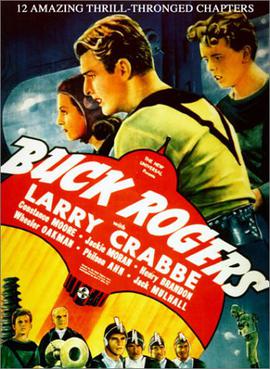 gers or Flash Gordon episode. There was never any doubt in Flash's mind that Ming is as Merciless as his epithet implies. He is constantly confident in himself and his ability to wage the great fight against his enemy. He is the quintessential hero--more than human, a demigod. In contrast, Luke has just been defeated in battle and has certainly fallen short of full-fledged demigodhood. The schemes of the Emperor and Darth Vader have actually borne fruit, despite all of the valor and moral virtue that Luke and his friends could muster. The entire universe had been overturned--not just the universe that plays setting to the saga, but the very concept that Lucas had established. The tone of the series has radically diverged from that of a straightforward serial.
Leigh Brackett’s script had seized Star Wars and demanded it to change into something higher and more meaningful than a simple “clash of good and evil.” While writing The Empire Strikes Back, she brought forth her considerable talents as a science-fiction author. One of the vehicles of science-fiction is exploring the implications of moral and ethical dilemmas that might be presented by advanced technologies and knowledge. These issues comprise the kernel around which any good science-fiction story can build itself. Thus, it is why Isaac Asimov’s Foundation books were so fantastic, as well as Orson Scott Card’s Ender’s Game. Leigh Brackett may have been so steeped in science-fiction authorship that she was incapable of writing a simple episode in a heroic duel between good and evil. It is entirely possible that she felt the overwhelming need to turn Lucas’ universe on its ear for the express purpose of exploring what those characters would do when faced with treachery and defeat.
In so doing, Brackett’s The Empire Strikes Back emboldened viewers and fans alike with the possibilities of the Star Wars universe. She created a set of expectations for the audience that the original Star Wars could not live up to itself. Overall, The Return of the Jedi is a satisfying conclusion to the trilogy. It resolves Han Solo's debt to Jabba and subsequent capture by Boba Fett early on, and with a good deal of excitement. Luke Skywalker has reached a level of self-assurance and control due to his training and experience fighting Vader. He walks the thin grey line between good and evil.
That singular resolution of character development is proof that The Empire Strikes Back had thrown Star Wars upon its procrustean bed. That unambiguous divide between light and darkness presented in the initial film had been blurred. Luke's brush with the Dark Side and his battle with Vader have taken something from him. He dresses in black. He speaks in grave ultimatums ("Jabba, this is your last chance. Free us or die."). He is torn between his desire to redeem his father and the possibility that he may fall to the Dark Side if he does not kill him. He has become a much darker character, even though his outward appearance projects the calmness and serenity of a bodhissatva.
However, many of the elements of a Flash Gordon serial persist. There are kitschy elements found throughout The Return of the Jedi. They seem somewhat subdued, however. The tension is higher and the mood of the film is much more serious than the original movie. The building tension takes on a sinister vibration as the Rebels prepare for their final, desperate assault on the Emperor. And then, the audience is introduced to the Ewoks.
Their inclusion disrupts the attitude of the films immediately, and are evidence that George Lucas has lost his focus and direction for these films. As previously stated, the original Star Wars sought to marry elements of the 10 cent afternoon adventure serial with heroic myth--a sort of Volsungsaga meets Buck Rogers. But often, heroic myth is far more serious, speculative, and full of tragedy and loss, compared to Buck Rogers or Flash Gordon. Thus, Leigh Brackett's screenplay for The Empire Strikes Back downplayed the pulp serial aspect of the story, and emphasized the darker and more speculative elements of heroic myth--elements that Lucas had never included in his original story. This confusion began to bloom into full-blown schizophrenia when Ewoks first made their appearance.
The Ewoks made Star Wars schizophrenic, but the schizophrenia is merely a result, or perhaps, a symptom, of the disruption The Empire Strikes Back created both within Lucas' conception of Star Wars and the expectations of fans and viewers. When one studies The Secret History of Star Wars, one rapidly discovers that the story Lucas wants to tell changes over time. This explains a number of key plot elements that were redactively edited to make things simpler. One example is the identification of Leia as Luke's twin sister. While the identification of Vader as Father Skywalker was a brilliant fusion of a number of loose plot threads, resolving a number of script problems while producing a powerful moral and emotional reaction within both the audience and the Star Wars setting itself, the incorporation of Leia as Luke's twin might functionally resolve a number of plot holes, but they fail to satisfy the audience. The original conception of another young Jedi trainee on the opposite side of the galaxy, a female who may have to face (and perhaps provide a romantic interest for) Luke before he confronts his father, was much more appealing a concept, but was beyond the abilities of Lucas or his scriptwriters to facilitate effectively.
In other words, Lucas is no longer capable of telling the story he originally wanted to tell. Either he had lost interest in the original themes, tone, and/or mood, or his own creation had grown so far beyond his original design concept that he was incapable of reining it back in. His attempts to do so (with the Leia-Luke resolution) only succeeded in debasing his creation. His attempt to diversify his film's appeal (as per the Ewok inclusion) is more of a reflection of his marketing savvy (by that point, Star Wars had become a juggernaut in the toy industry). While it was not a bad idea from a financial standpoint, from a literary perspective, it weakened the plot's credibility. When a clan of stone-age teddy-bears manage to destroy armored mechanized assault platforms and space-age soldiers with onagers (tortion catapaults), suspension of disbelief is terminated. Until that moment, Star Wars functioned as a believable universe. Tortion catapaults require a minimum of early iron-age construction techniques and mathematics to operate, and once that is realized by the viewer, he is no longer watching a space-opera science-fiction, but instead an episode of Looney Tunes.
This dischord only intensifies throughout The Phantom Menace. Star Wars and The Empire Strikes Back had reached their perfected forms. Both movies had achieved their objectives brilliantly, without flaw or error. The utterly pedestrian resolution of the Luke-Leia problem reveals that The Return of the Jedi was not a perfectly whole creation. It could not achieve every possible goal. It did, however, succeed at some. The confrontation of Luke with his father was masterfully handled, as was his father's redemption. The destruction of the second Death Star and the defeat of the Imperial Fleet was an intensely thrilling and visually spectacular battle sequence. Luke's choice of the third path, that thin grey line between the light and dark halves of the Force, satisfies the deeper, inner battles of the heroic journey that Leigh Brackett had invoked in the previous film. Despite it's flaws, The Return of the Jedi succeeds far more often than not.
The Phantom Menace, however, is a wholly confused experience. The elements of the pulp serial are so subdued as to be virtually nonexistent (with the exception of the opening escape of the two Jedi from the spaceship). However, the emphasis on the heroic journey has now been transferred to young Anakin Skywalker. But the heroism has been reduced at the expense of the mythical (cf. his "virgin birth"). Despite claims to the contrary by modern theorists, the concept of the virgin birth is virtually absent in most of mythological and religious beliefs (with the exception of Christianity). Rather, the father is almost always a god who seduced the mother, a maiden. The inclusion of the Gungans is a far cruder, and indeed more absurd, version of the Ewok angle, and assumes that the audience is comprised not of just children, but stupid children.
Throughout the film, we are pushed and pulled through a variety of tones, moods, and atmospheres that do not set well together. At times the film is serious and political, other times it is vapidly whimsical and absurd. As a child, young Anakin Skywalker courageously races a pod and destroys an enemy starship, but, paradoxically, the Jedi Council finds him full of fear and is hesitant to train him. Lucas' screenplay has aimed at far too many targets to be able to satisfy them effectively. Thus, The Phantom Menace gives off an impression of obtuseness, especially when compared to the acuity of Star Wars and The Empire Strikes Back. The Attack of the Clones and The Revenge of the Sith showed improvements, with each crawling closer to a balance between Lucas' original vision and Brackett's adaptation of it. Yet they were unable to achieve the same tightness of plot and flawlessness of storytelling. Star Wars had become far too self-aware, and felt obligated to provide more than it was capable. Lucas, also, has shown an inability to handle fame and fortune well, and has descended from being a mildly eccentric introvert to an erratic delusional who has fanatically taken it upon himself to rewrite past history and suppress all information regarding his franchise that does not comply with his "official party doctrine." Lucas' own introversion and eccentricity undoubtedly have a role to play in the degradation of Star Wars, but they, too, are but a facet of the problem.
But these are points that have been made many, many times by folks far more verbose than I. What is important to note here, however, is the fact that The Phantom Menace is not the cause of Star Wars' disruption and devolution. Indeed, most dissatisfied fans have a tendency to blame the symptoms and never consider the source of the illness. Lucas himself is only part of the problem. In truth, he never killed Star Wars. The reality is, with Leigh Brackett's screenplay, Star Wars left George Lucas. And, despite his strongest efforts to recapture it, Lucas has repeatedly fallen short of the simple perfection that he had achieved in 1977. Star Wars had grown and "taken its first step into a larger world." Brackett had injected plot elements and an epic feeling of tragedy and triumph that Lucas was not capable of controlling. The Empire Strikes Back is the pivot-point of the saga, the fulcrum around which Lucas' career, franchise, and universe turned.
Subscribe to:
Posts (Atom)